Scapsense
Gaining control of items in the wardrobe
Team
Carolina Vaz-Pires
Linh Dang
Derya Şengül
Elīna Zīle
Linda Paulauska
Industry
Software Development
Discipline
Service Design, UX
Deliverables
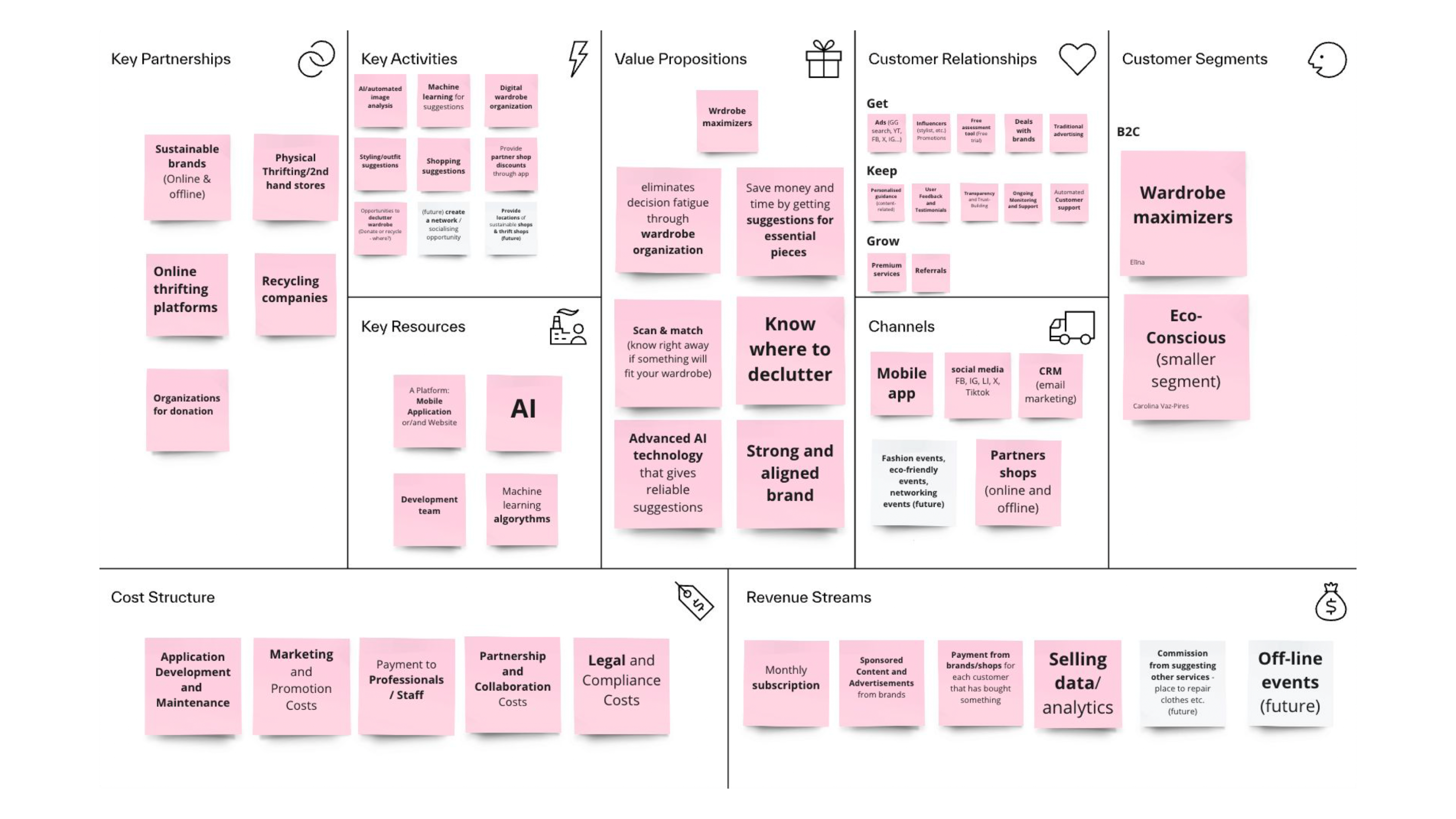
Business Model Canvas
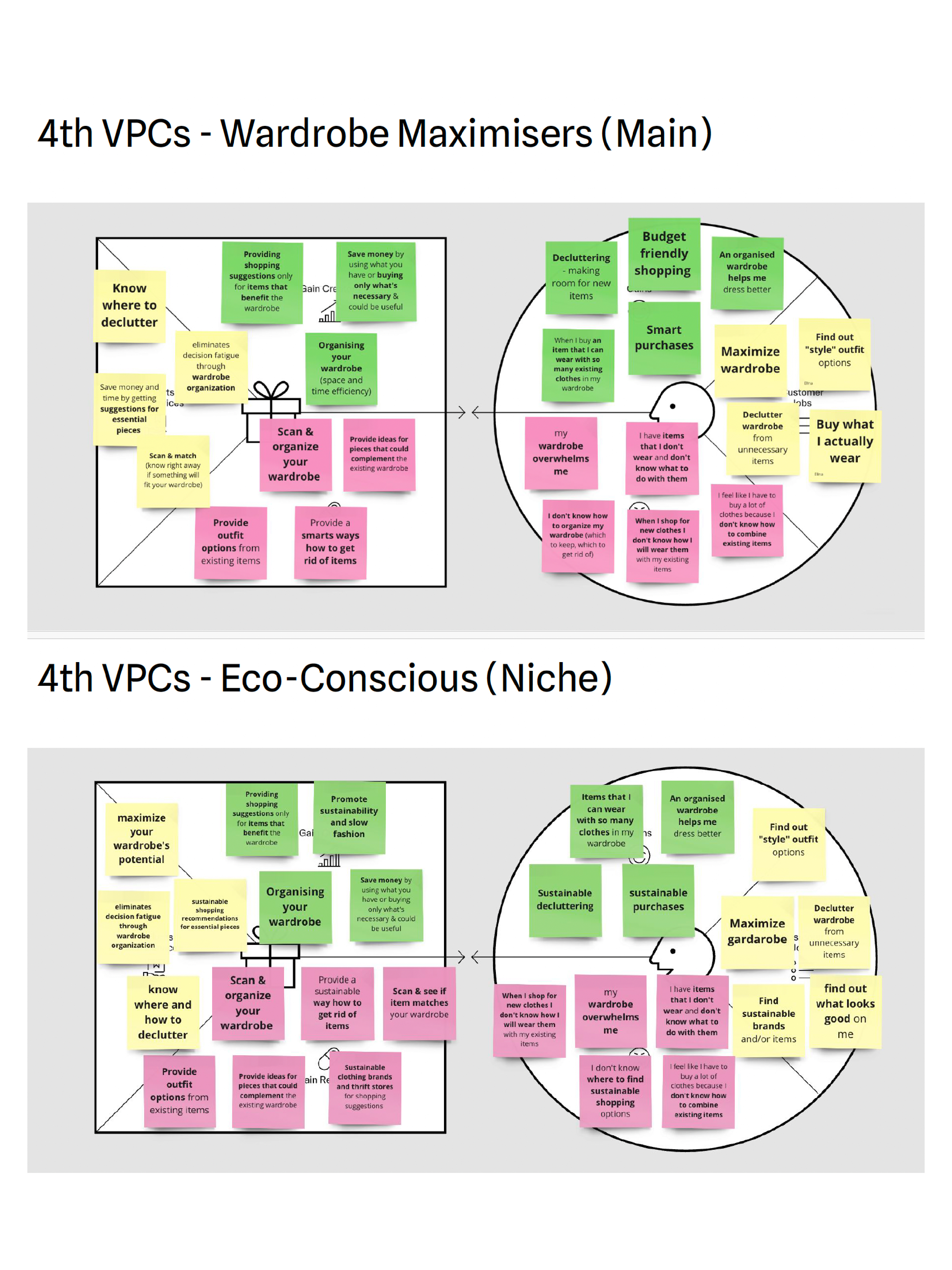
Value Proposition Canvases
Clickable Prototypes
Landing Page
3-Minute Pitch
Year
2024
This project ran over five months during the Innovation Lab course of my master's programme, with a five-person team. My specific contributions involved product research, contextual interviews, facilitating project meetings, task allocation, and building the landing page.
We started broad with a self-confidence platform spanning styling, mindfulness, and career development, and had to learn to let go of assumptions quickly. Through four business model iterations, nine value proposition canvases, and multiple rounds of user testing, we narrowed to a focused wardrobe app.
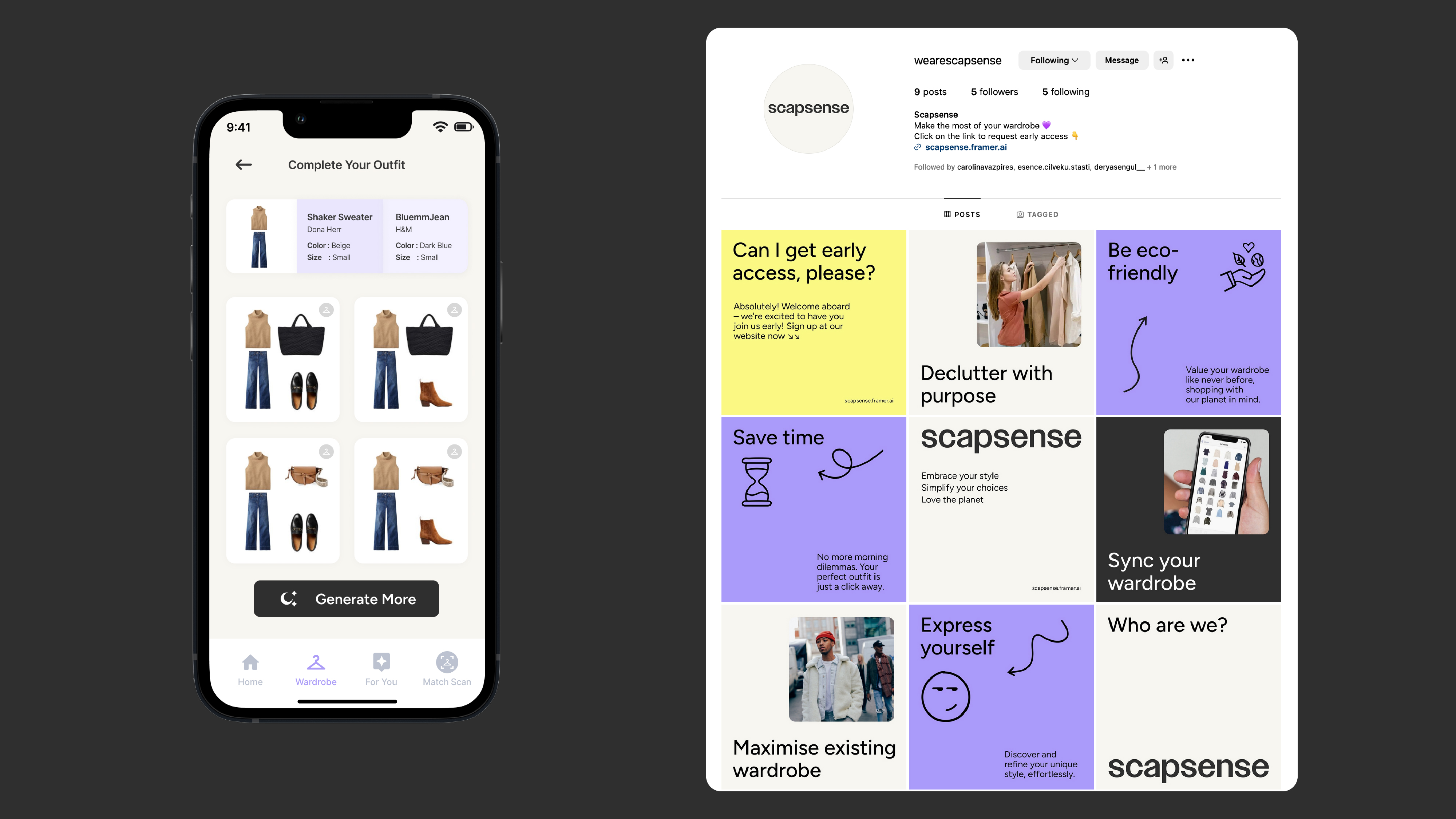
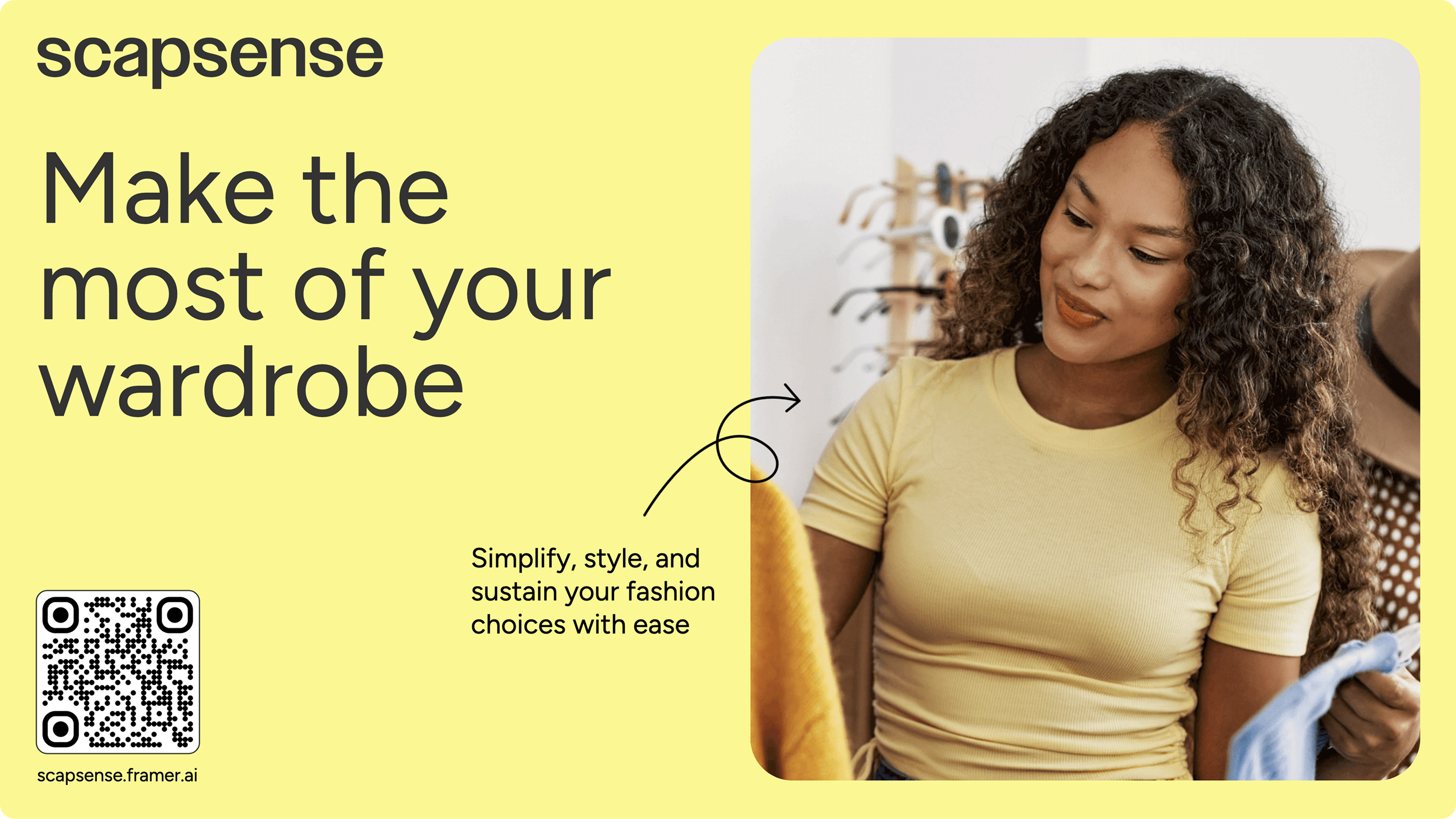
The core insight is that the problem isn't a lack of clothes, it's a lack of clarity about what works together. Scapsense is a digital solution for those who feel overwhelmed by a closet full of clothes yet nothing to wear. It provides suggestions to get extra essential pieces that allow them to create even more outfits, together with what they already own. With the Scapsense mobile application, people can upload their clothes to unlock a world of outfit combinations, all tailored to their preferences. Also, it offers a match scan feature that significantly aids shoppers in making better purchasing decisions by identifying items that match their existing closet.
A full wardrobe but nothing to wear
Most people own more clothes than they wear, yet still feel stuck every morning. Shopping adds to the pile without solving the problem. At the same time, fast fashion's environmental cost is growing harder to ignore.
The core insight we found is that the problem isn't a lack of clothes, it's a lack of clarity about what to wear, what works together, and what to sustainably let go of.
From broad idea to focused product
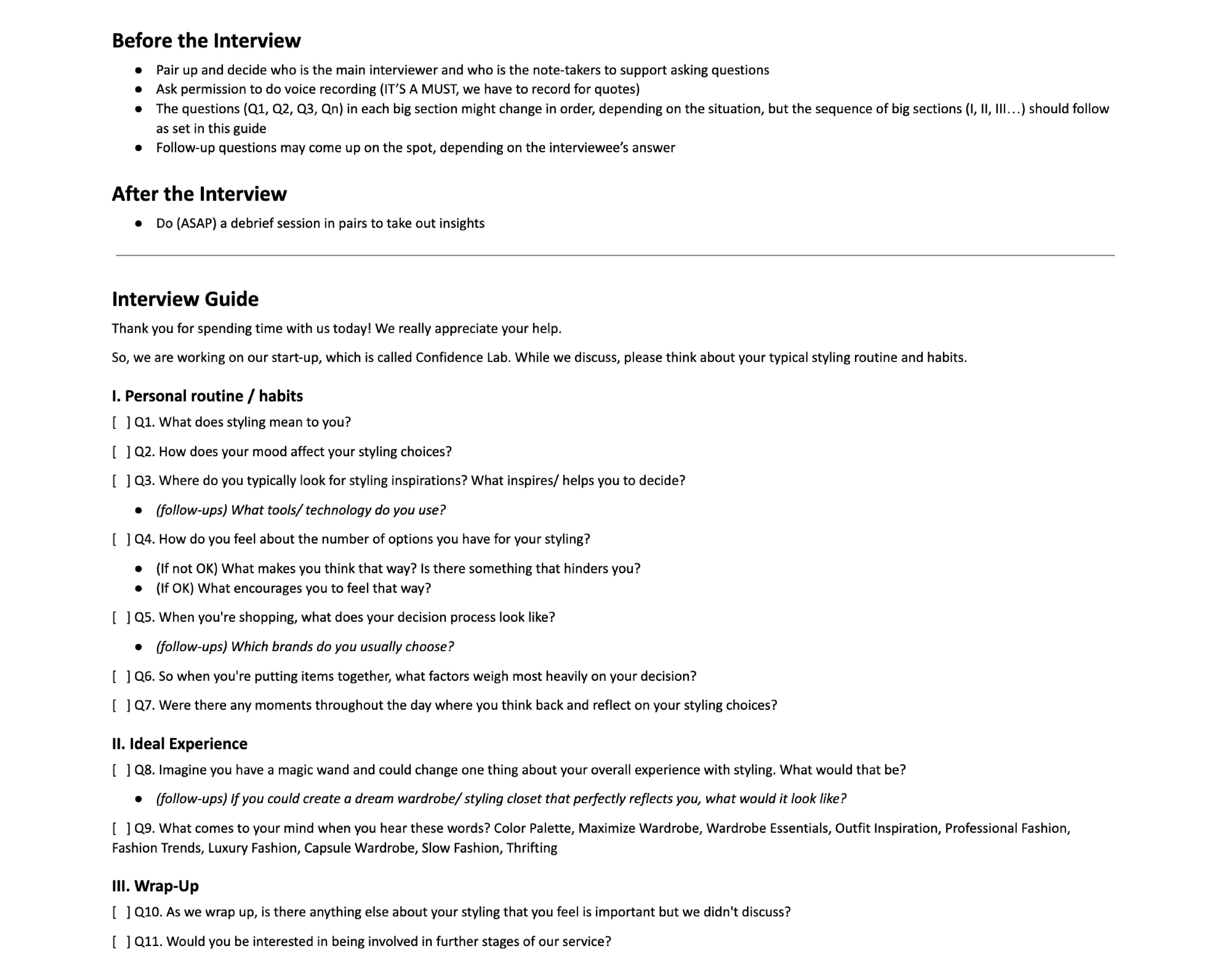
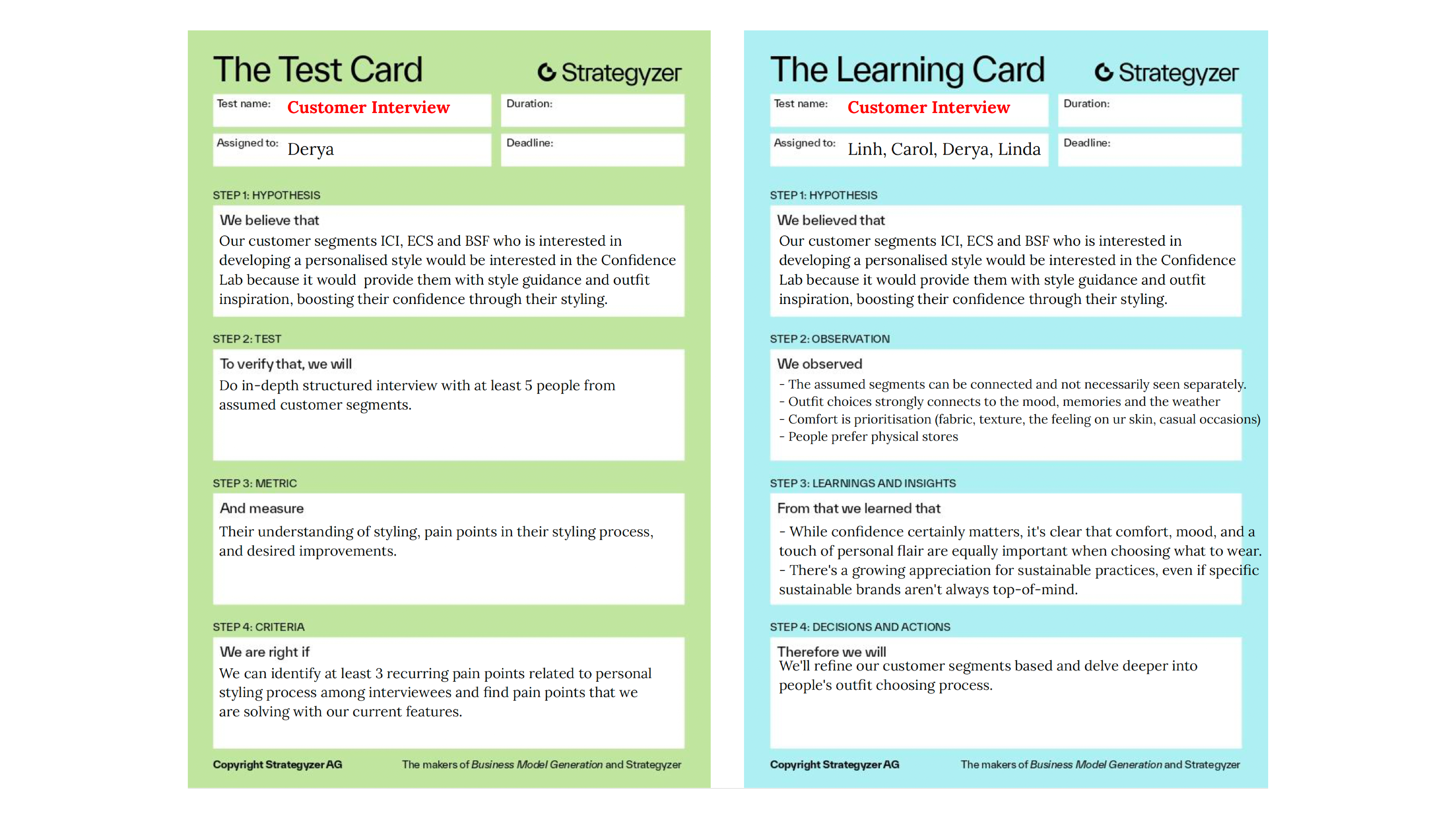
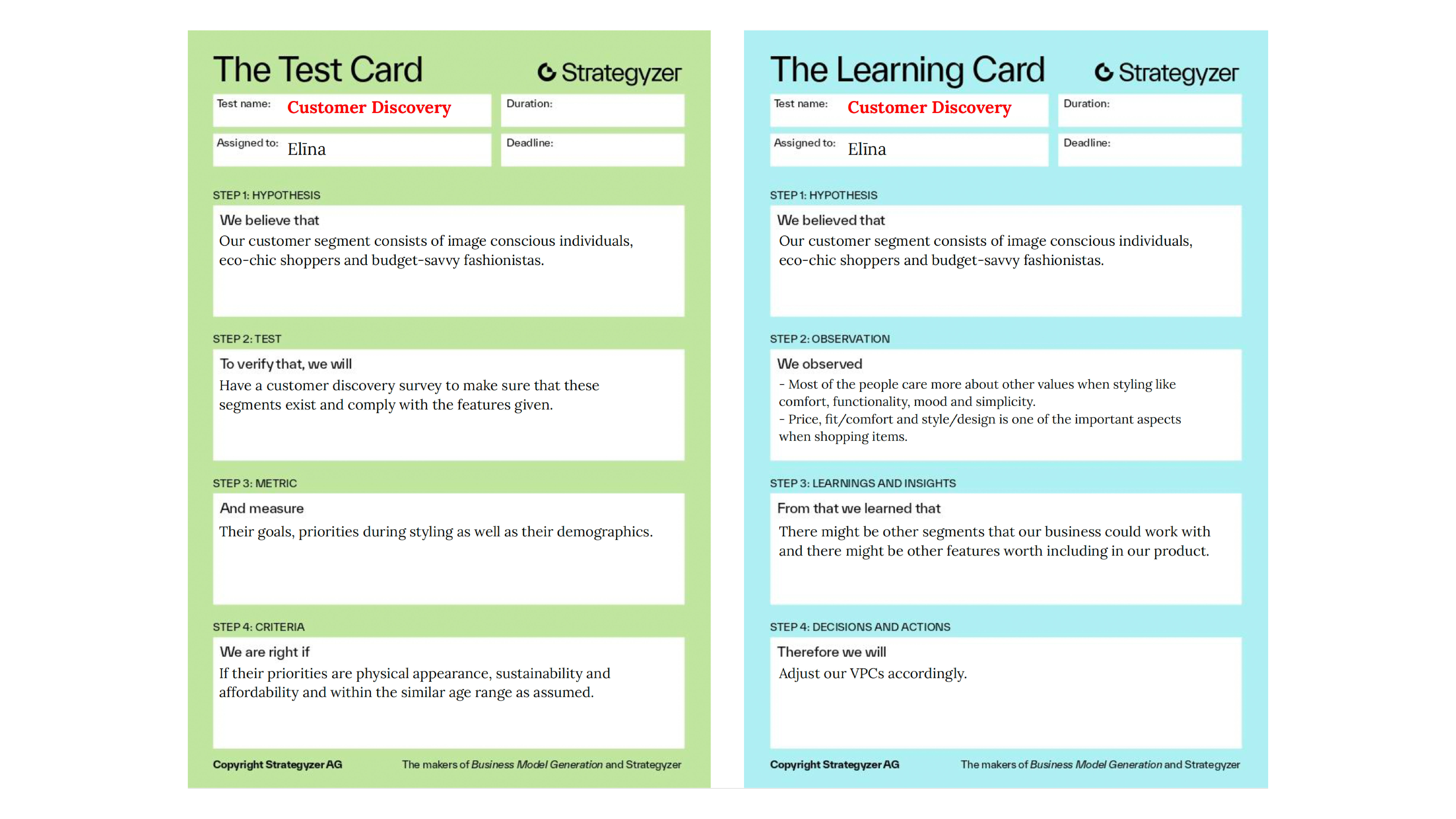
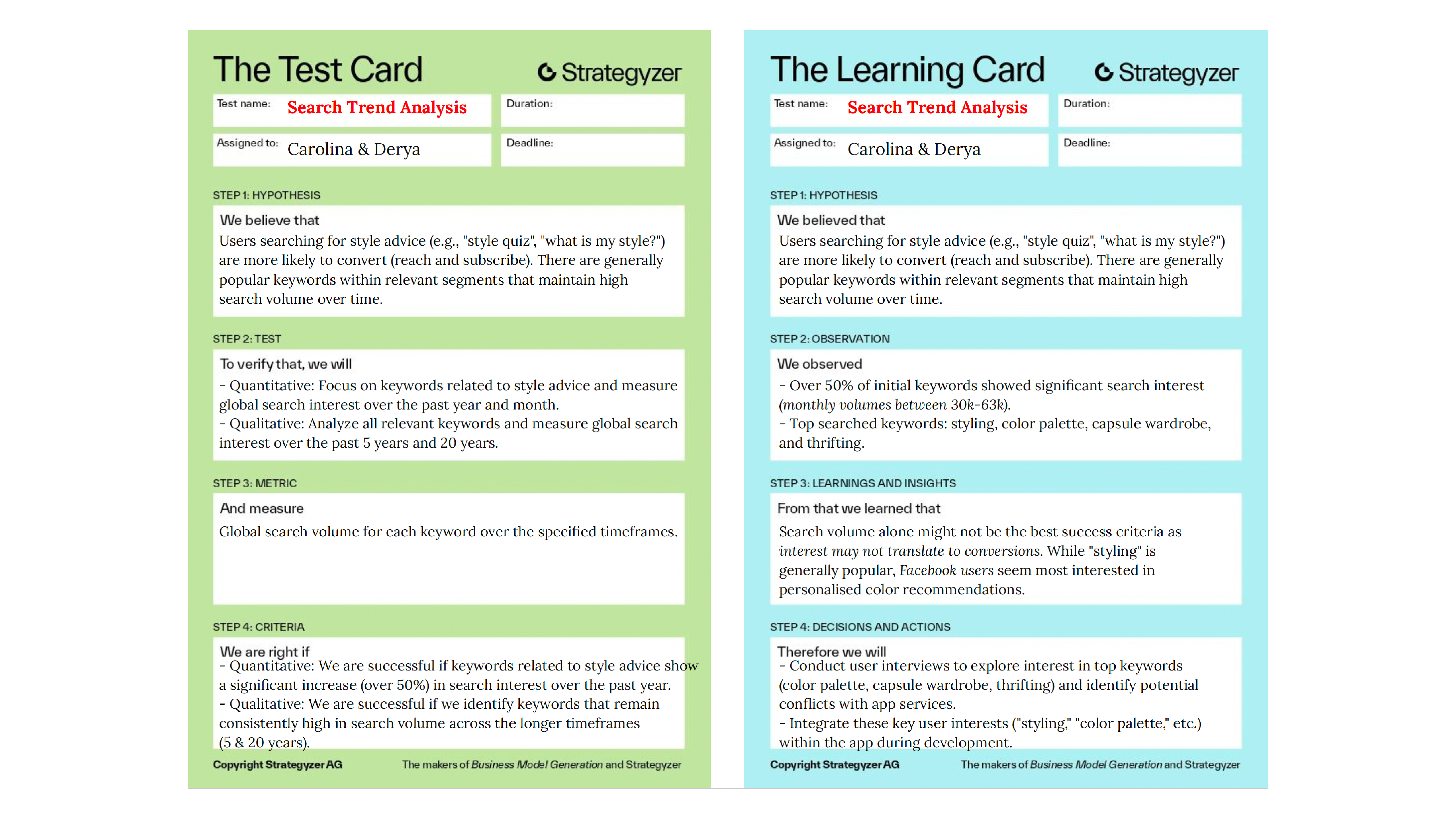
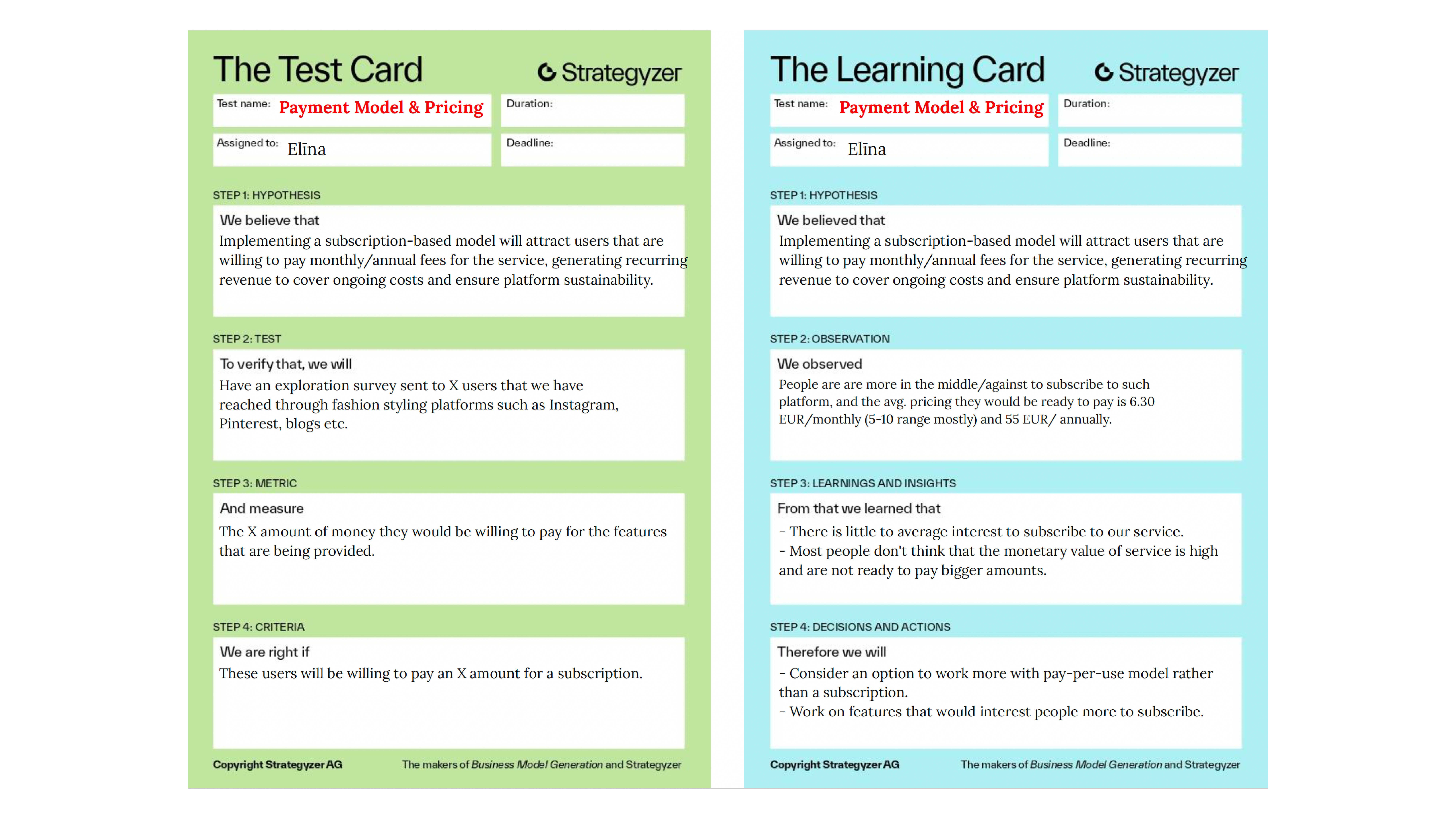
The project began as "Confidence Lab," a comprehensive matchmaking platform for enhancing self-confidence across styling, mindfulness, and career development. Through structured discovery and testing using Strategyzer test and learning cards (i.e. semi-structured interviews, a discovery survey, a search trend analysis, and a payment model test), we progressively narrowed down to a focused wardrobe app. Each method either confirmed or overturned an assumption, directly shaping the next design decision.
Phase 1: Initial idea and 1st Business Model Canvas (BMC)
Phase 2: Narrowing and Customer discovery
Phase 3: Testing and 3rd BMC
Phase 4: Final product and Validation
What we learnt and what it forced us to change
Comfort and mood matter as much as style.
Interviews showed users didn't just want to look good, they wanted to feel right. Outfit choices were strongly tied to mood, occasion, and even weather. Our initial VPCs were built around aesthetic and sustainability values, missing this entirely.
Challenge
Our personas were too style-focused
Opportunity
Added mood, weather, and comfort as core filtering dimensions in the app
The real pain is combining what you already own.
Users didn't struggle to find clothes they liked, they struggled to combine what they already had. "I don't know how to wear it with anything I own" came up repeatedly. This reframed the product from a shopping assistant to a wardrobe organisation tool.
Challenge
Our first BMC assumed shopping was the primary user job
Opportunity
Wardrobe digitalisation and outfit generation became a must-have
Sustainability awareness is high, while brand knowledge is low.
Users expressed genuine concern for sustainability, but couldn't name sustainable brands easily and struggled to find second-hand options that matched their style. The majority cited sustainability as a reason for buying second-hand, but mainly as a bonus to lower prices, not a standalone motivator.
Challenge
Sustainability alone wasn't strong enough to drive a purchase decision
Opportunity
Curating thrift and sustainable brands inside the app removed the discovery friction that users couldn't overcome on their own
Willingness to pay was lower than expected.
The payment model test revealed average willingness to pay of €6.30/month, with most respondents leaning toward pay-per-use rather than a subscription. Only 22.9%–25% were interested to very interested in paying monthly, putting our original subscription-first model at risk.
Challenge
Subscription revenue alone couldn't sustain the business at realistic conversion rates
Opportunity
Pivoted to freemium and pay-per-use, added brand-sponsored content and vintage store data as parallel revenue streams
Colour analysis was the highest-interest feature.
Search trend analysis showed top keywords, including styling, colour palette, capsule wardrobe, held monthly search volumes of 30k–63k. Facebook users in particular showed the strongest engagement with personalised colour recommendations, above all other feature concepts tested.
Challenge
Colour analysis requires a selfie and AI processing which is technically complex to get it right
Opportunity
A high-demand, low-competition feature that no direct competitor offered as a core free entry point
Additional features users asked for across interviews:
From paper sketches to clickable prototype
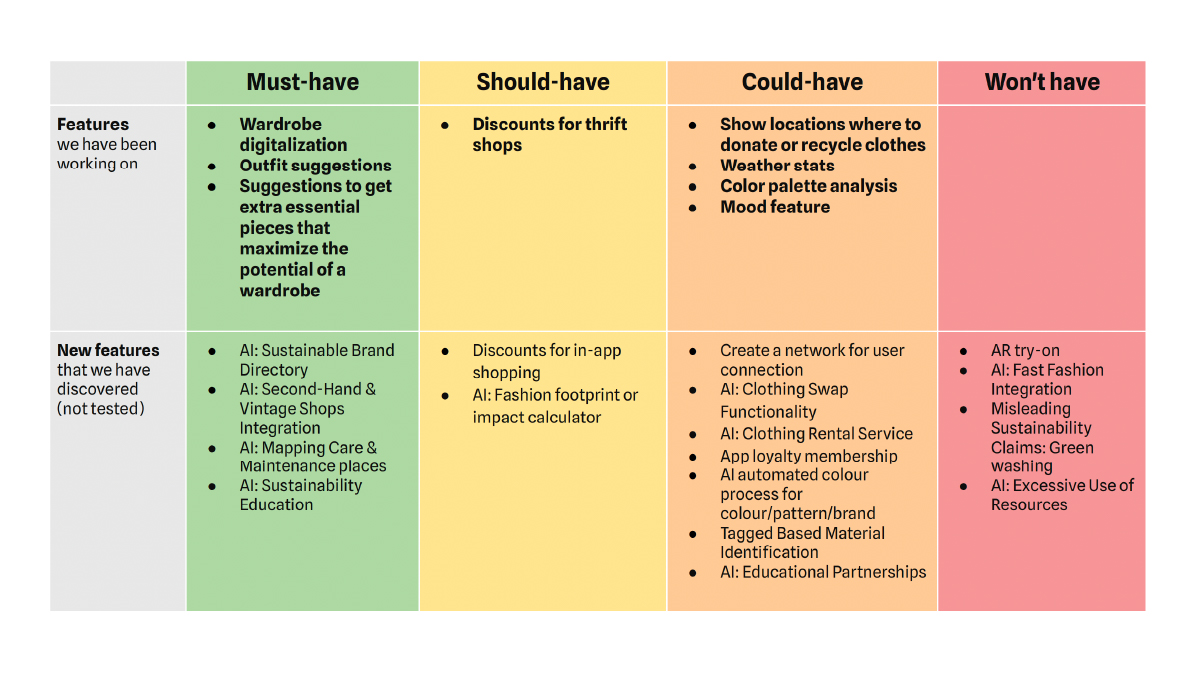
Using the MoSCoW method for feature prioritisation, we defined must-have features for rapid paper prototyping. Paper prototypes validated the onboarding flow and surfaced a critical UX issue in which the entry journey assumed too much prior knowledge, requiring an extra instruction layer beforehand. This was caught before any hi-fi work began.
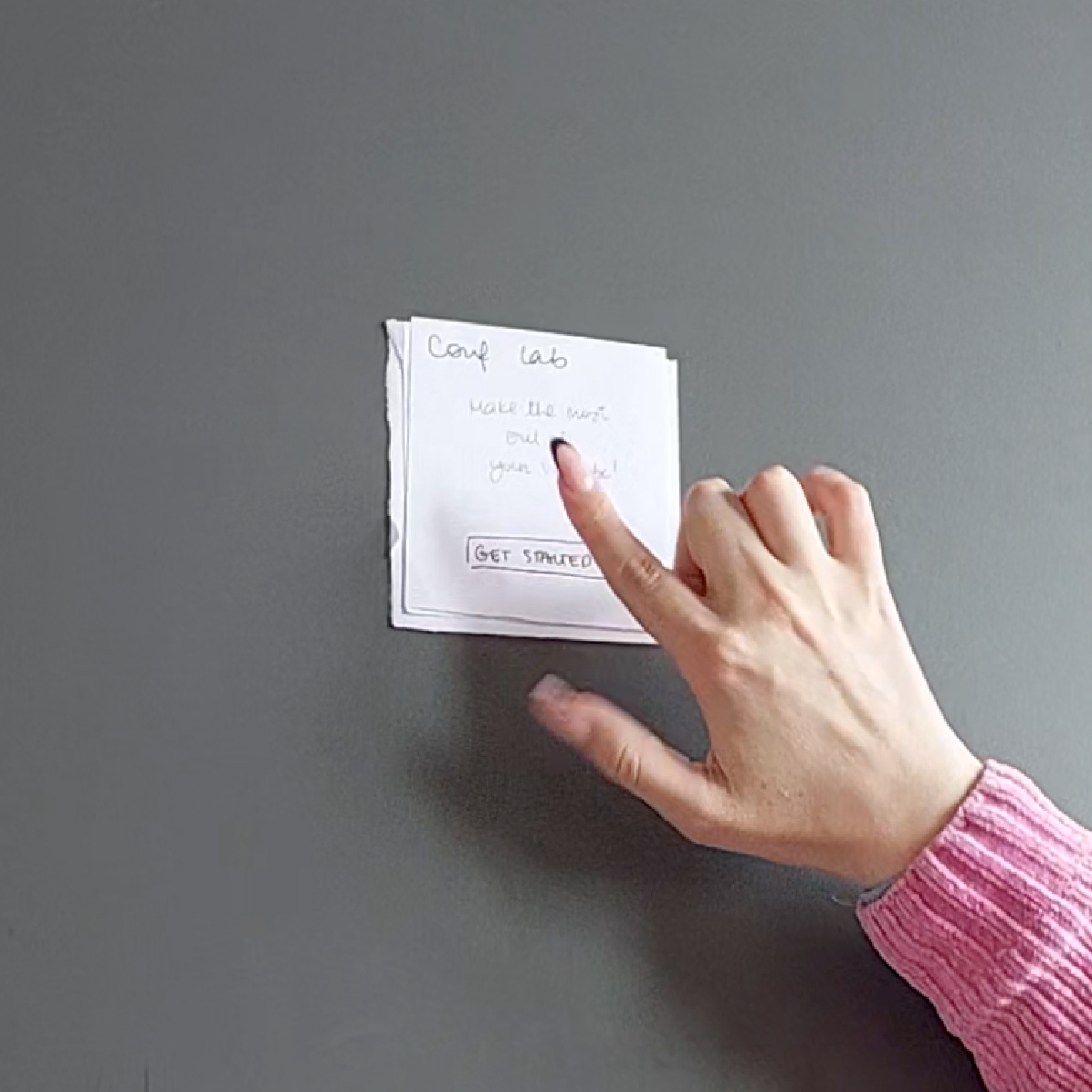
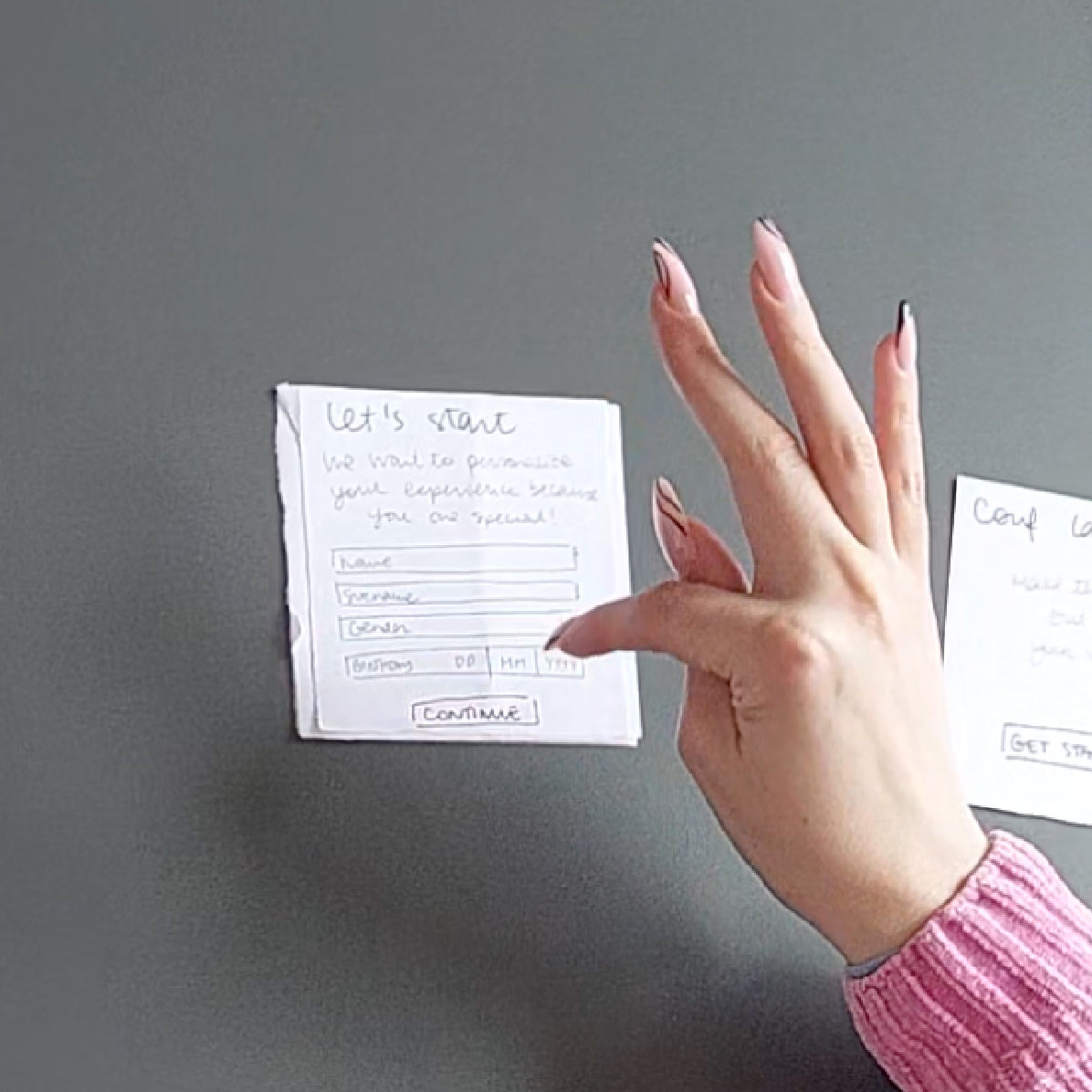
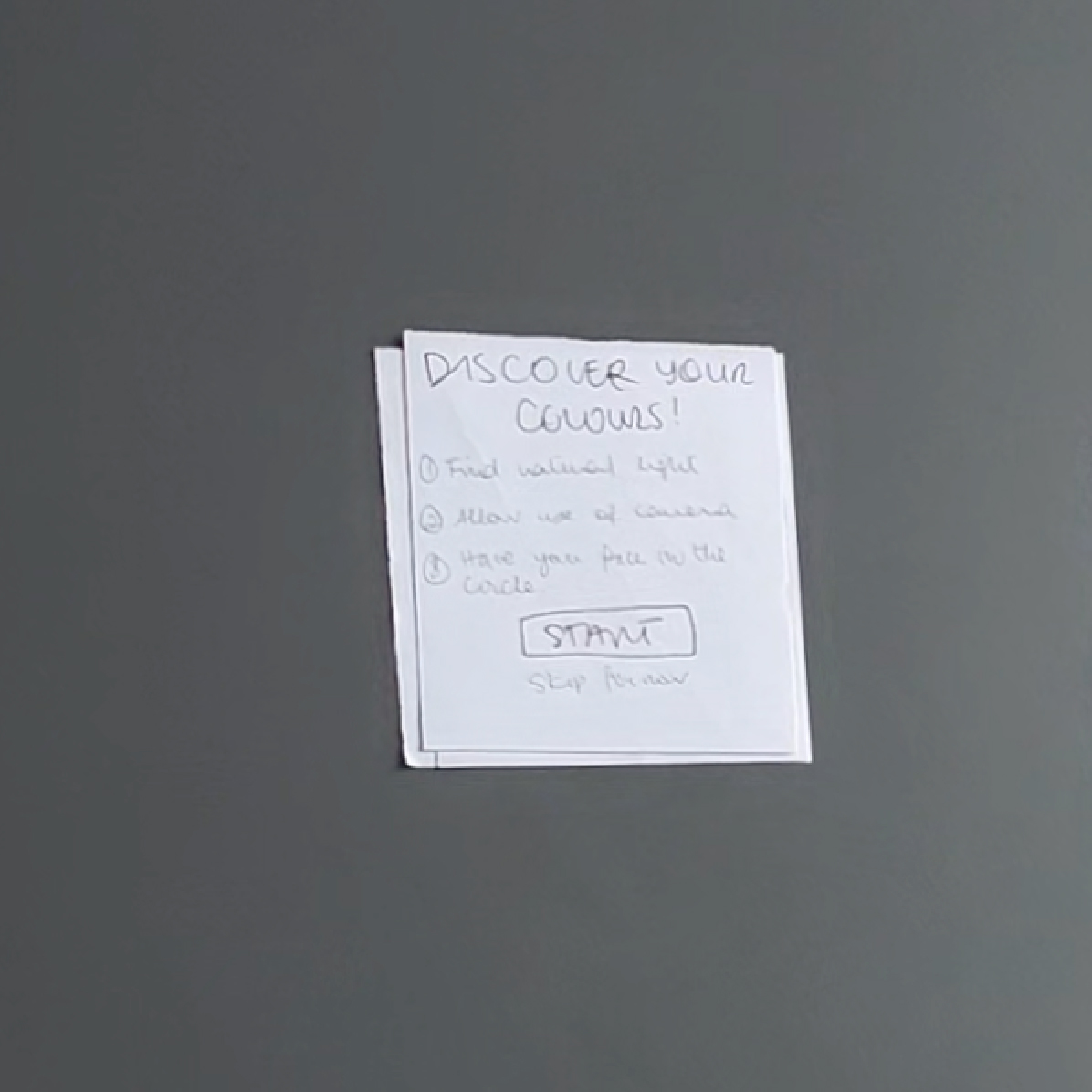
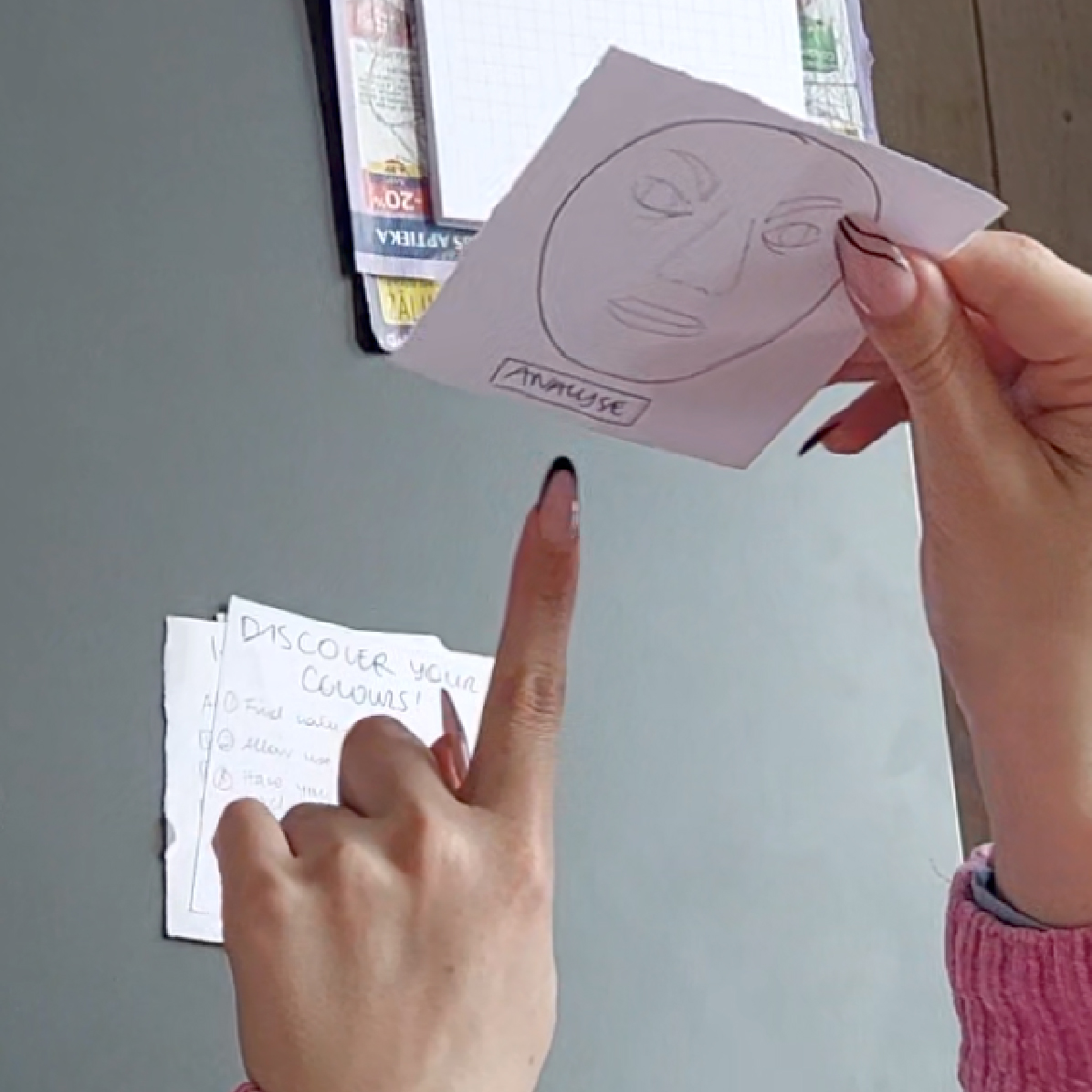
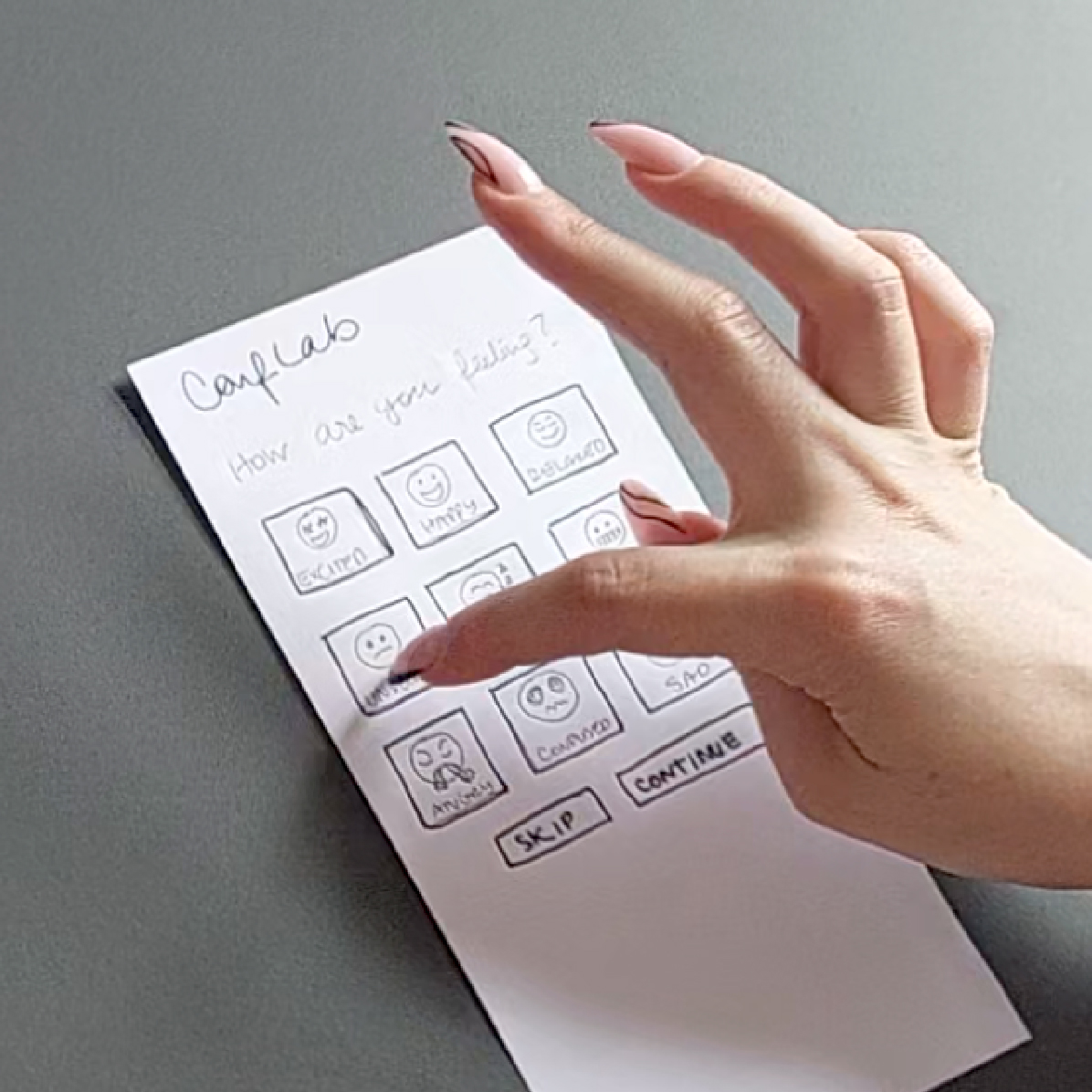
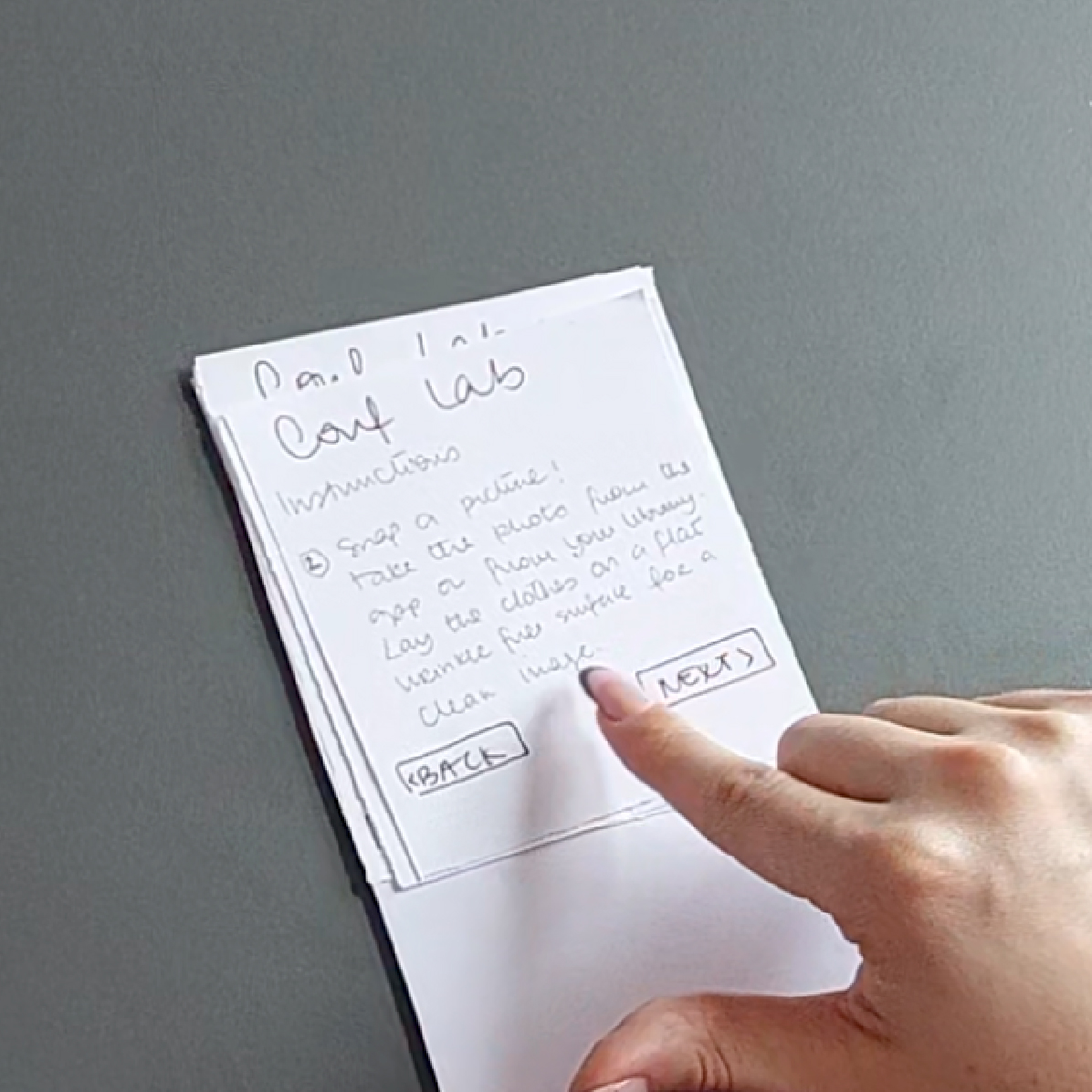
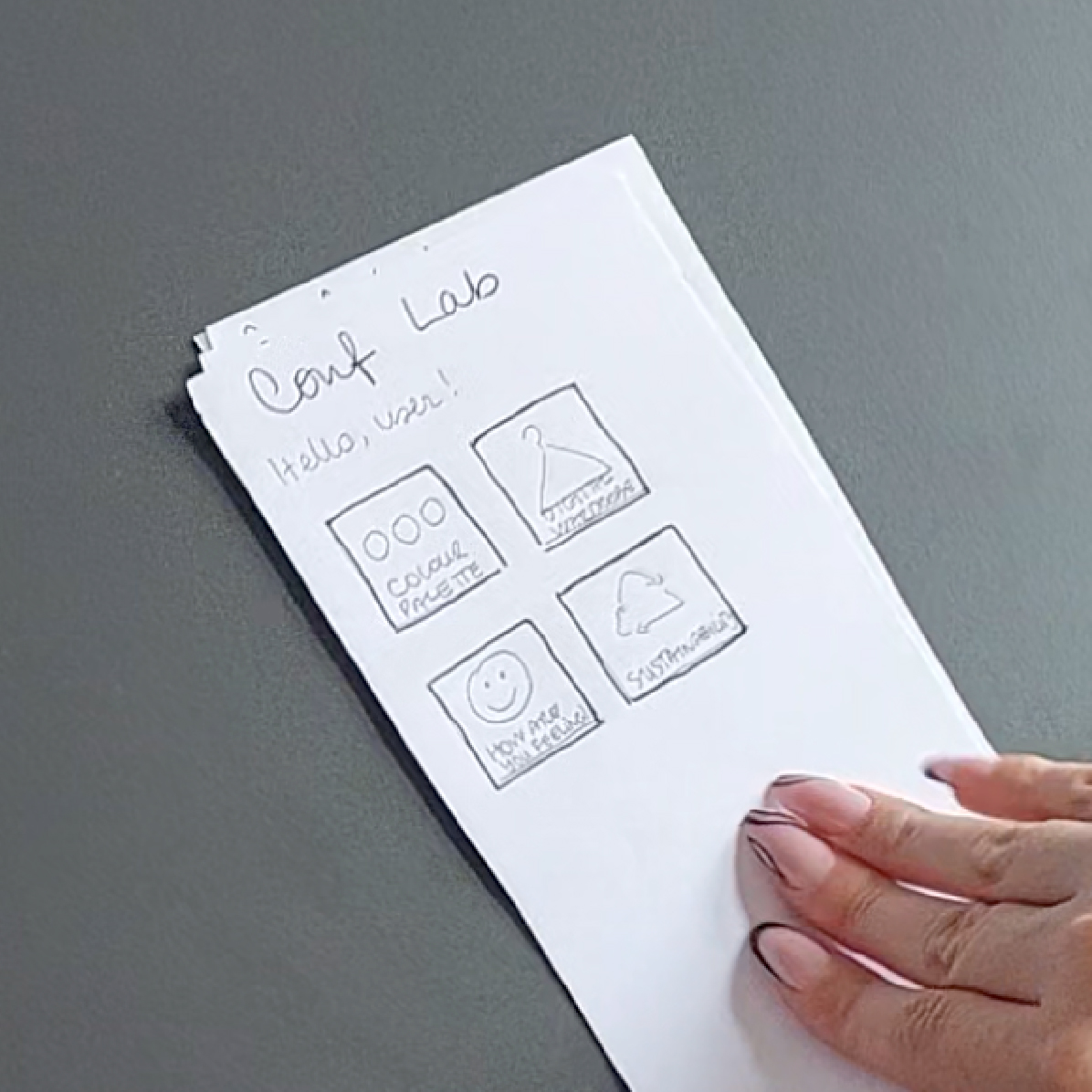
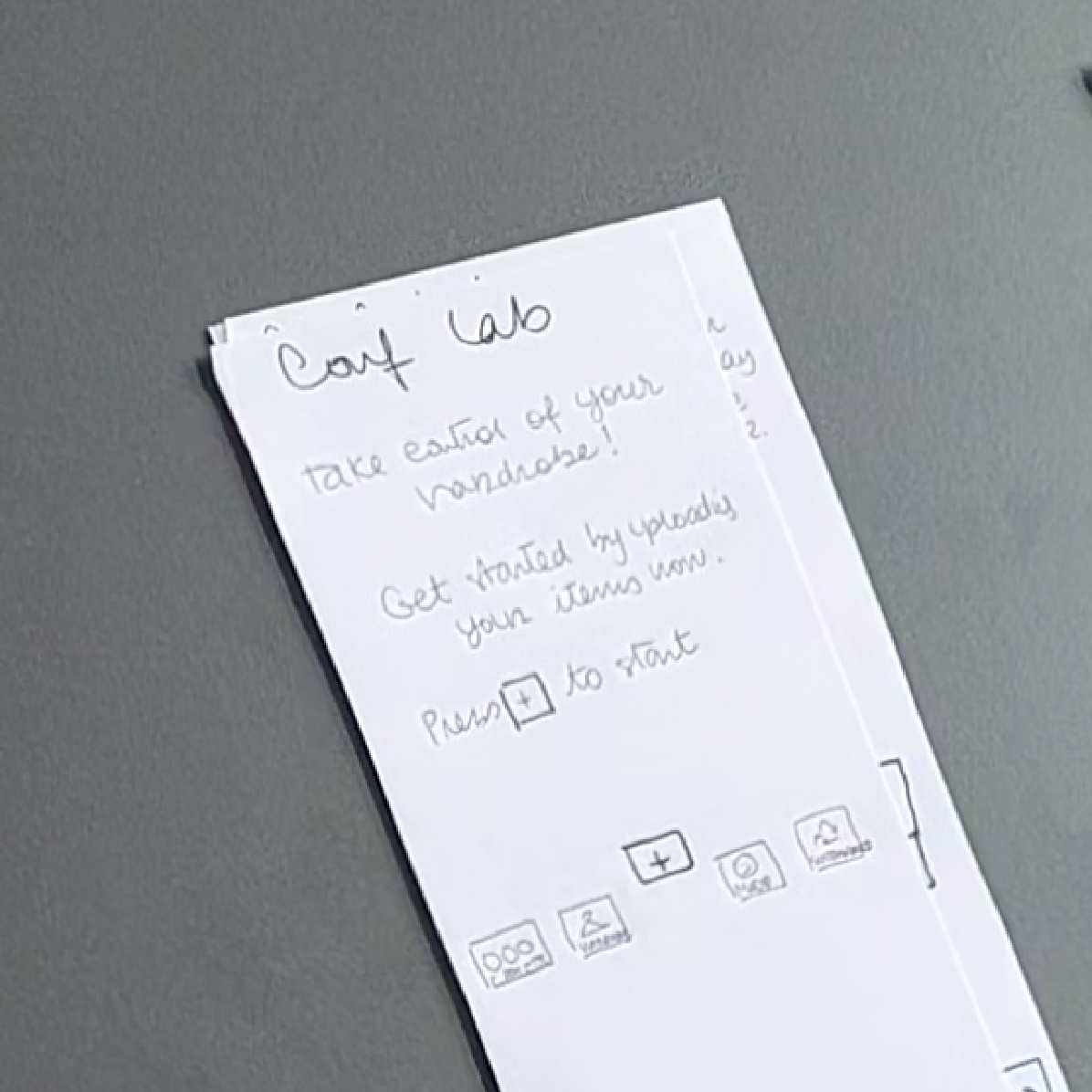
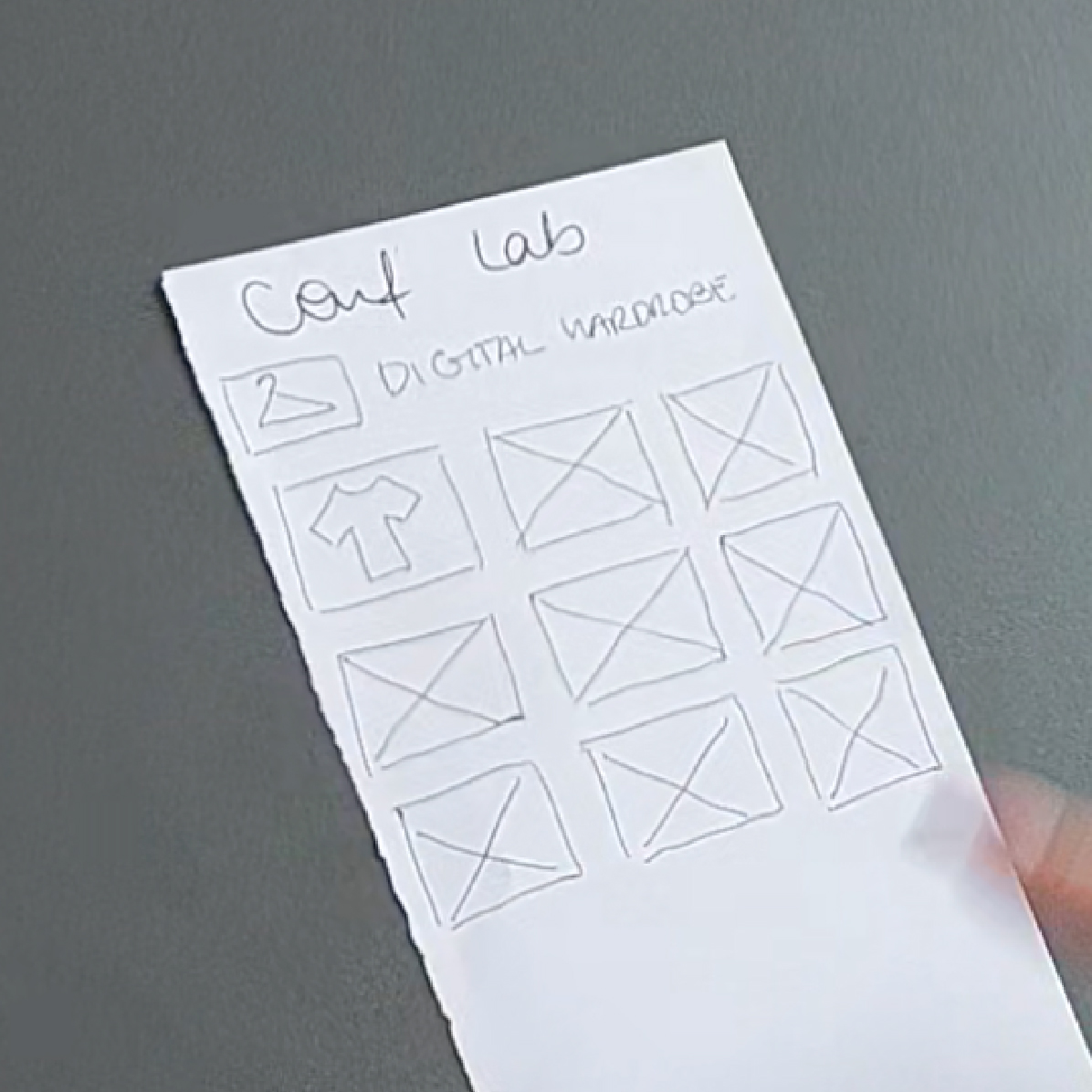
The Figma clickable prototype covers four core flows: New user journey, Outfit suggestion, 4-pc outfit generating, Match scan.
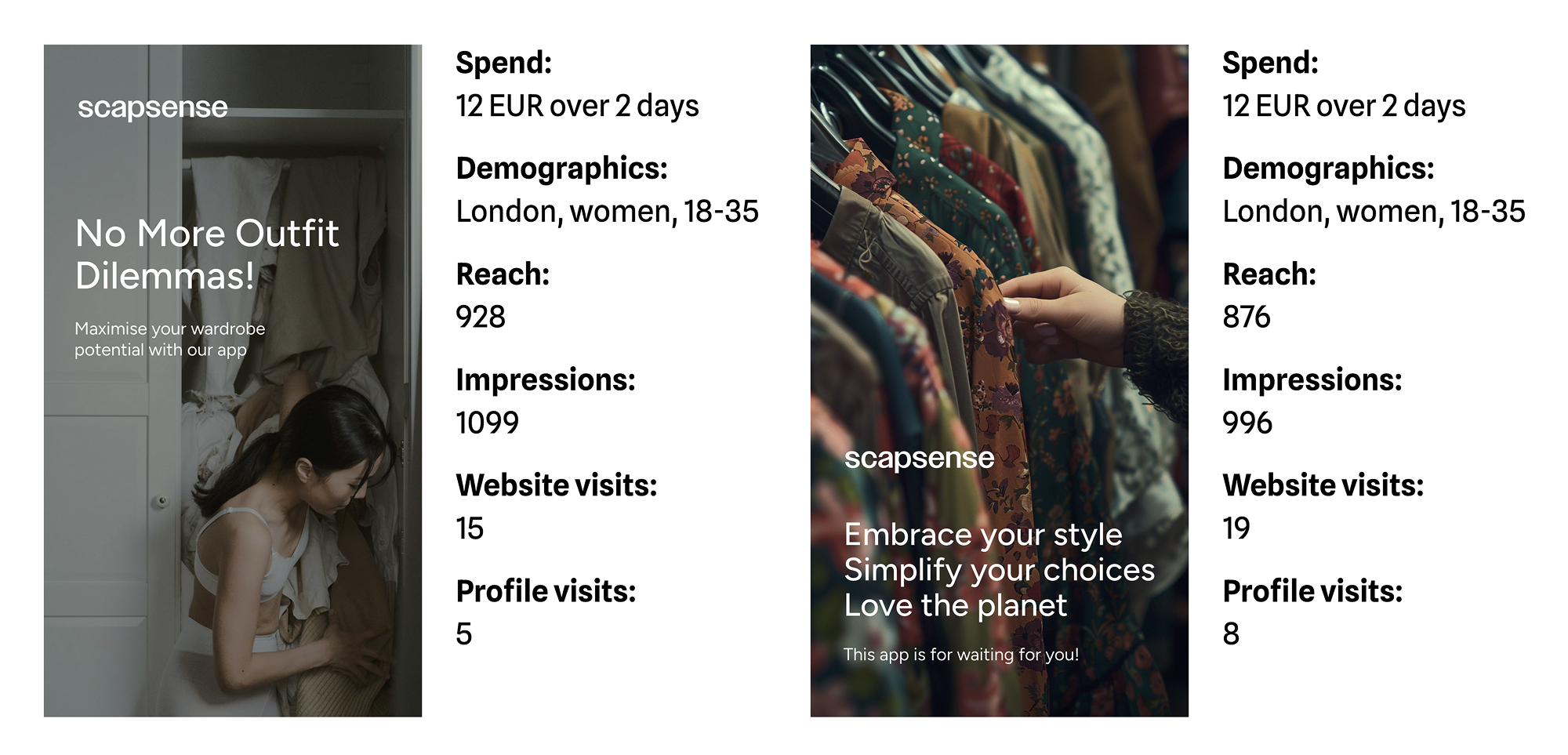
Having the clickable prototype ready, we ran a paid Instagram split test targeting women aged 18–35 in London with two distinct creative directions, €12 spend each within two days, a live landing page (scapsense.framer.ai) tracking visits. The sustainability-led option slightly outdid the other on the metrics that matter most (+27% more website visits, +60% more profile visits), validating both angles as efficient brand hooks and positioning going forward.
A validated concept, ready for development
Product
Mobile-first. Wardrobe digitalisation, AI outfit suggestions, sustainable shopping integration, and Match Scan camera feature.
Business model
Freemium (50 items) + €5.99/month. Additional revenue from brand-sponsored content and data partnerships with vintage stores.
Market positioning
Competing with Indyx, Acloset, Stylebook, Whering, differentiated by sustainability integration and Match Scan, which no direct competitor offers.
Financial projection
Latvia-based team keeps costs lean. Break-even projected 2027, first profitable year targeting ~€130k net.